

Business VoIP and call centre software: telephony that works with your organisation

There was a time when a phone system was a cabinet in the meter cupboard, wired up by a specialist who came back to it every year. You called, you picked up, you hung up.

Customer succes manager met headset in gesprek met een klant

Why telephony stopped being a separate system long ago

Whatever was discussed during the call then had to be entered somewhere by hand, provided someone still remembered it and had the time.

Those days are over. Not because telephony has become less important, but because telephony and your business software have started having the same conversation. What is said, who is calling, what the customer reported before, which deal is in progress, which ticket is open: that belongs on the same screen the moment the phone rings.

That is the shift business VoIP is about. Not the technology of calling over the internet instead of copper, because that has been the standard for years. But the integration of voice into your organisation's digital environment, so that a phone call ends up in your CRM, your ticketing system and your customer history just as an email or a chat message does.

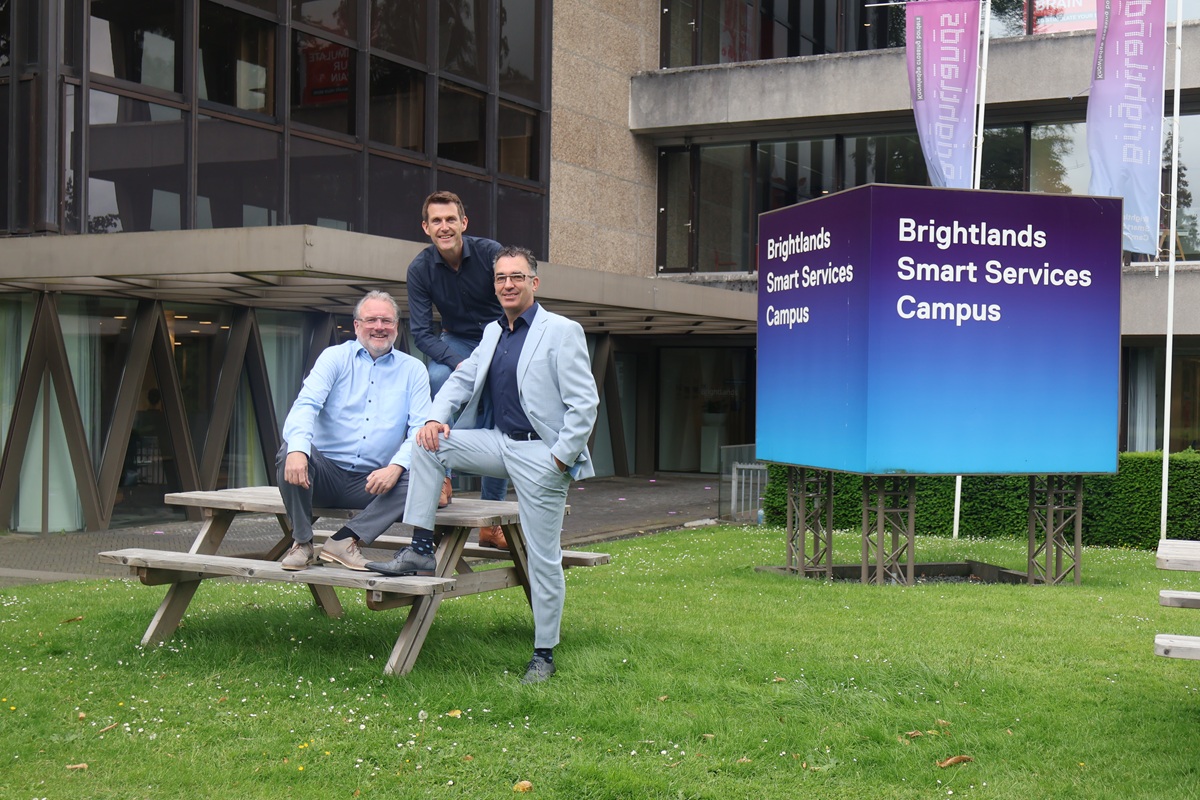
Mobile XL en Collabotics op de Brightlands Smart Services Campus

Telephony know-how that goes back further than the cloud

Most VoIP providers and CRM partners moved into cloud telephony when it became commercially interesting. At Mobile XL, the telephony know-how goes back further.

Our people have been working with telephony and communication systems since the 1990s, long before VoIP existed as a term, let alone as a service. That means a hands-on understanding of how telephony works technically, what affects call quality, how routing and queue management work, and how the connection between the telephony environment and the rest of the IT infrastructure is actually made.

The most concrete example of that early expertise dates from the start of this century, when our founder built the integrations between server-based telephony platforms and the booking systems of the travel industry. That was remarkable for its time: the caller was recognised, their booking was immediately visible on the agent's screen, and after the call the interaction was logged automatically. What sounds obvious now was an architectural challenge back then, in which we had to connect the customer data, the telephony software and the back-office applications without any standard solutions to do it. Well-known organisations such as De Vakantiediscounter and Vliegwinkel.nl, then still start-ups, got their technology off the ground with knowledge that is still present at Mobile XL and has been passed on to the next generation.

That experience taught us how a VoIP or call centre implementation really works: not just on paper but in practice, on the first incoming customer call after go-live.

What business VoIP means in 2026

Cloud telephony for business is mature technology by now. The questions stopped being about sound quality or reliability long ago: those are up to standard. The questions are about what you can do with the connections.

  • Incoming calls with customer context

    As soon as a customer calls, the agent immediately sees who it is, what was discussed before, which tickets are open and which deal is in progress. No searching, no repeat questions.

  • Outgoing calls from your CRM

    One click on a phone number in your CRM record starts the call. It is logged automatically, including call direction, duration and time.

  • Routing based on customer data

    Not passing calls around based on extension numbers and good luck, but putting them through based on who is calling: premium customer, open complaint, region, product. That decides who takes the call.

  • Queue management and real-time dashboards

    How many callers are on hold, how long are they waiting, which agents are available, what is the average handling time? A team leader can see that information all the time, so they can step in straight away.

  • Call recording and quality monitoring

    Recordings for training, compliance and dispute handling, linked to the customer file instead of tucked away on a server nobody can find any more.

  • Omnichannel

    Telephony as a channel alongside email, chat, WhatsApp and social, not as a separate system but as part of the same ticket flow. The same customer profile, the same SLA, the same overview.

Zoho Voice or Squaretalk

Choosing between Zoho Voice and Squaretalk is not a choice between good and better, but a choice based on your volume, your processes and your ambitions. We can implement, maintain and further develop either one with you.

Zoho Voice: telephony as part of your Zoho environment

For organisations already working with Zoho CRM or Zoho Desk, Zoho Voice is the most obvious step. Zoho Voice is the built-in telephony functionality of the Zoho platform, which lets you make and receive calls, log calls and route them without an external integration.

The seamless connection with Zoho CRM and Zoho Desk is the strongest argument. When a customer calls, the CRM profile opens automatically. When the call ends, it appears in that contact's call history. Creating a ticket from a call takes two clicks. And the call data (duration, direction, time, agent) is available in Zoho Analytics reports together with all your other customer data.

For internal communication within a team or department, Zoho Cliq works as an addition: text messages, voice channels and video meetings on the same platform.

Zoho Voice suits organisations that want to embed their telephony in an existing Zoho environment without bringing in another vendor. Administration, user management and reporting sit in the same place as the rest of your customer environment.

Squaretalk: a cloud call centre for higher volumes and more complexity

Where your telephony needs go beyond the standard features of Zoho Voice (higher call volumes, more complex queue management, predictive dialling, detailed call centre analytics or specific compliance requirements), Squaretalk is the platform we use alongside Zoho.

Squaretalk is a cloud-based call centre platform built for teams whose main working tool is the phone: outbound sales, inbound customer service, blended call centres. It combines voice, SMS and call automation in one environment, with a Zoho integration through the official Phonebridge partnership and the option of deeper API integrations when the routing logic has to run on CRM data.

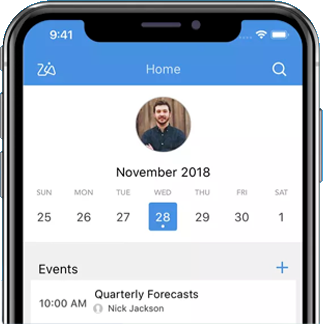
Telefoon met agenda-app op het scherm

Try Zoho Voice for free

Start a Zoho Voice trial and see for yourself how telephony, CRM and customer service come together in one Zoho environment. We are happy to help you get started.

What connecting telephony and CRM really delivers

This is the point that gets too little attention in many VoIP sales conversations. Telephony itself is a commodity; the value lies in what you manage to connect it to.

  • A customer calls with a question

    Without a CRM integration, the agent types the customer's name, their reference number and their comment into the system afterwards, if they ever get round to it. With a working integration, the call is linked to the right profile from the start and the note ends up in the right place after the call. That is not a small saving on admin time; it is the difference between customer data that grows and customer data that goes stale.

  • A ticket with the context of the call

    One step further: a ticket created from a phone call carries the context of that call straight away. The agent who picks up the ticket knows what was discussed. The customer does not have to explain it again.

  • Management information

    A report showing how many phone contacts there were with high-value customers, what the average handling time was and which calls lead to follow-up tickets: that is management information that only exists when telephony and CRM speak the same language.

zakelijke voip

Call centre and customer service: more than dialling numbers

The term "call centre" conjures up images that are no longer accurate. The modern service centre combines telephony, email, chat and messaging, works with SLAs, has a knowledge base that supports self-service, and steers on quality indicators that are not only about call duration but also about customer retention and first-contact resolution.

That broader approach calls for a broader environment. Zoho Desk as the ticketing platform, Zoho CRM as the customer file, Zoho Voice or Squaretalk for telephony, and Zia Agents as the AI layer that processes incoming calls and tickets automatically: together they form one environment instead of a pile of separate applications.

We implement that environment as a whole, including the integrations, the configuration and training your team. That is what our telephony history concretely delivers: not a vendor installing their product, but a partner who understands how telephony fits into a customer process.

Why larger organisations need a different approach

For a small team, a VoIP integration is a matter of access and configuration. As the organisation grows, the questions become more complex.

  • Multiple locations

    One telephony system that works across offices, with local numbers per branch, central reporting and the ability to route calls between locations without the customer noticing.

  • Language routing

    A customer calling in French wants to be put through to a French-speaking agent. That sounds logical, but it requires routing based on language, and that requires a system that understands it.

  • Compliance and recording

    In financial services, healthcare and a number of other sectors there are legal obligations around call recording, retention and access. Those requirements belong in the VoIP configuration, not tacked on afterwards.

  • Integration with your existing IT landscape

    Besides the CRM, other systems are often involved: ERP, accounting, ticketing, scheduling. A phone call that has to consult data from three systems to be routed correctly needs an integration layer. We build those integrations. See also application integrations.

  • Single sign-on and provisioning

    New employees automatically get the right devices, permissions and extensions when their account is created. That is part of a mature management structure.

  • Rollout across countries

    Local numbers, local tariff rules, local language requirements, combined with central reporting for management. We work in Dutch and English and tailor our support to the countries where you operate.

Medewerkster werkt geconcentreerd achter een laptop op kantoor

How we work together

We never start with the platform but with how you communicate now, what gets stuck and what you want to be different a year from now. That sometimes leads to Zoho Voice, sometimes to Squaretalk, sometimes to a hybrid approach, and sometimes to the advice that your existing telephony is fine and the gain lies in the integration that is still missing.

That honesty comes from our breadth. We do not sell telephony subscriptions; we implement environments in which telephony is one of the channels. That difference in perspective determines the quality of the advice.

Twee collega's bekijken samen een klantenportal op een laptop

Frequently asked questions about business VoIP and call centre software

  • Zoho Voice is the built-in telephony functionality of the Zoho platform, ideal for organisations that want to embed their telephony seamlessly in their existing Zoho environment without an extra vendor. Squaretalk is a specialised cloud call centre platform for higher call volumes, more complex queue scenarios, predictive dialling and detailed call centre analytics. Which fits best depends on your volume, your processes and your ambitions.

  • When a customer calls, the agent immediately sees the CRM profile with the customer history, open tickets and deals in progress. After the call, it is logged automatically. Tickets can be created straight from the call. For management it delivers reports that combine telephony and customer data: which calls lead to tickets, what the handling time is per customer group, which agents score highest on first-line resolution.

  • Yes, provided it is set up properly. Call encryption, access rights per employee, controlled storage locations for recordings and retention periods that meet sector requirements can all be configured. In regulated sectors (financial services, healthcare) we build compliance requirements into the configuration as standard.

  • In most cases, yes. Keeping your numbers (also called number porting) is usually possible for business numbers, including 088 numbers and landlines. The lead time and the technical options depend on the current provider and the number range. We map that out in advance.

  • A clearly scoped Zoho Voice setup for one team usually takes a few days to a week. A full call centre environment with complex routing, several locations, CRM integrations, compliance configuration and training runs to a few weeks. We work in phases so you have something working early in the project.

  • Yes. Cloud telephony is location-independent by definition. Employees make and receive calls through a softphone on their laptop or mobile, with the same business number as at the office. That is one of the structural advantages of cloud telephony over a traditional phone system: no ties to a physical location.

  • Yes. For outbound use, features such as click-to-call from your CRM, call logging per contact record and integration with campaign or lead lists are the basic requirements. At higher volumes, predictive or power dialling comes into play: the system dials numbers automatically and only passes a call to an agent once someone answers. That increases effective calling capacity significantly. For this kind of use, Squaretalk is usually the better choice over Zoho Voice.

  • The upfront costs of cloud telephony are lower: no server room, no hardware per handset, no maintenance contract for a phone system. You pay a subscription per user per month. With larger numbers of users or a lot of international calling, the monthly bill can add up, but the total cost over three years is lower in almost every case than a traditional on-premise phone system, including the management burden that disappears with it.

Want to know which VoIP solution suits your situation?

Including the integrations with your CRM and ticketing system. Mobile XL has the telephony know-how, the CRM expertise and the integration capacity to deliver that from start to finish.